Digital Marketing Strategy for Startups: Where to Start on a Limited Budget
A small budget is not the real problem in startup marketing; the problem is spending before answering four basic questions. A practical framework that turns every pound, dirham and riyal into learning and results.
"We need marketing" — almost every founder says it after launching a product. It quickly turns into a page on every platform, scattered ads and content posted without a plan, followed by disappointment: "We tried digital marketing and it didn't work for us."
The truth is that digital marketing rarely fails because the budget is small. It fails because spending started before the basic questions were answered. With a limited budget those answers matter more than ever, because every mistake is expensive.
Four questions before your first ad
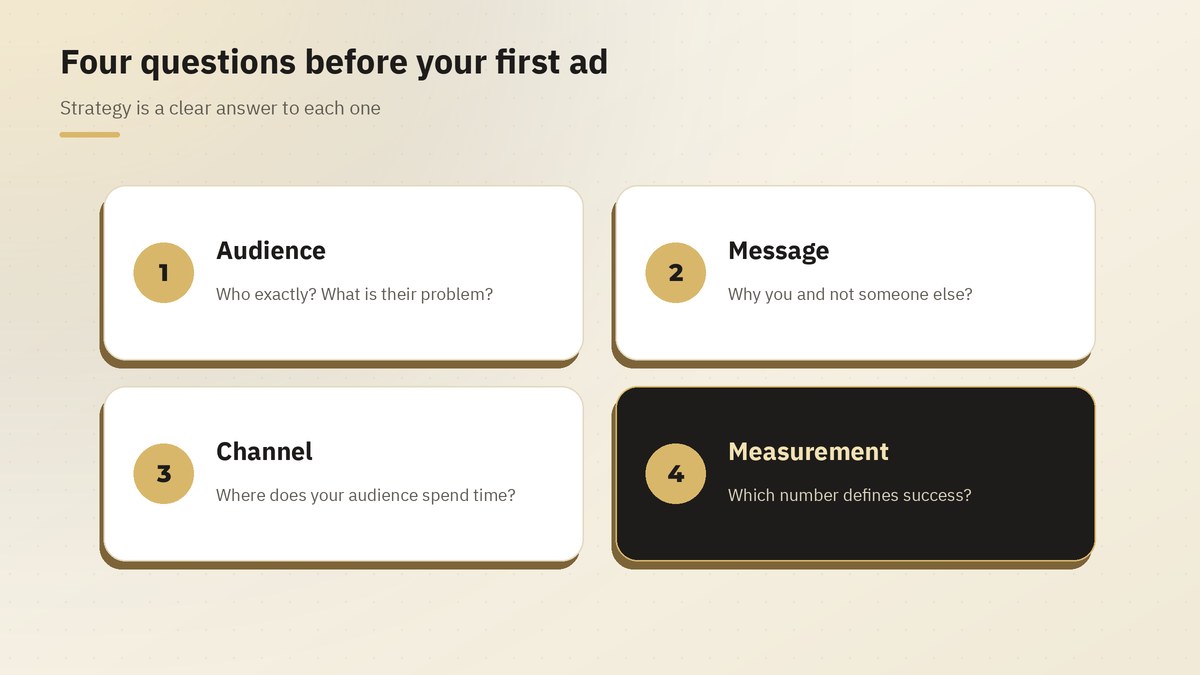
Strategy is not a long document; it is a clear, written answer to these four questions.
1. Audience: who exactly?
"Everyone who needs our service" is not an audience. Describe your ideal customer as if they were someone you know: what is their job? What problem keeps them up at night? Where do they look for solutions? Who influences their decision? The narrower the definition, the stronger the message and the cheaper the targeting.
2. Message: why you and not someone else?
One sentence that explains the value in the customer's language, not the company's. "An integrated AI-powered platform" describes the product; "book your clinic's appointments automatically and cut no-shows" describes what the customer gains. Test the message in real conversations before spending on ads.
3. Channel: where does your audience spend its time?
You don't need to be everywhere. Choose one or two channels where your audience is concentrated, and master them before expanding. A company selling to managers will find its audience on LinkedIn and in search; a consumer brand may find it on Instagram and TikTok; and many local services in our region actually sell through WhatsApp.
4. Measurement: which number defines success?
Before you start, decide what counts as success: a quote request? A booking? A purchase? Then link every campaign to that number. Followers and likes can be helpful signals, but they are not the goal.
How to split a limited budget
There is no magic ratio, but this split is a good starting point for most startups in their first months:
- The largest share for the main channel you expect to bring customers — search ads, direct outreach or partnerships.
- A share for experiments: a new channel or a different message, tested with a small amount for a fixed period.
- A share for the basics that serve every channel: a clear landing page, measurement tools, and good images and content.
At the early stage, the goal of marketing is not fast growth but fast learning: which message, for which audience, through which channel, brings paying customers?
A plan for the first 90 days
- Month one — foundations: write down the four answers, prepare one landing page for one offer, set up measurement, and test the message in conversations with prospects.
- Month two — experiments: two or three small campaigns on the main channel, each testing a single variable (audience, message or offer), with a weekly review of the numbers.
- Month three — focus: stop what didn't work, double down on what brings customers at an acceptable cost, and document what you learned.
Common mistakes
- Talking to everyone: a generic message to a broad audience means pricier ads and weaker results.
- Judging a channel after a week: most channels need time and several tests before you can judge them.
- Neglecting the landing page: an excellent ad that leads to a confusing page is wasted money.
- Copying competitors: what works for another company may not suit your audience or your stage.
Conclusion
A startup does not need a huge budget to succeed in digital marketing; it needs clarity: a defined audience, a convincing message, the right channel and one number to measure success. Start with that clarity, and every amount you spend becomes an investment in learning rather than a bet on luck.