Telemedicine in the Arab World: Opportunities and Challenges
Consulting a doctor through a screen is no longer a temporary experiment — but it is not a full replacement for the clinic either. Where telemedicine works, where it falls short, and what it needs to succeed in our region.
A few years ago, consulting a doctor over the phone seemed strange to most patients in our region. Today it is part of many people's lives: a diabetic patient followed up from home, a mental-health consultation without the trip, a second opinion from a doctor in another city.
But enthusiasm for remote care should not make us forget an important truth: the screen is a great tool for some cases, and not enough for others. Success in this field starts with knowing the difference.
Where telemedicine works — and where it falls short
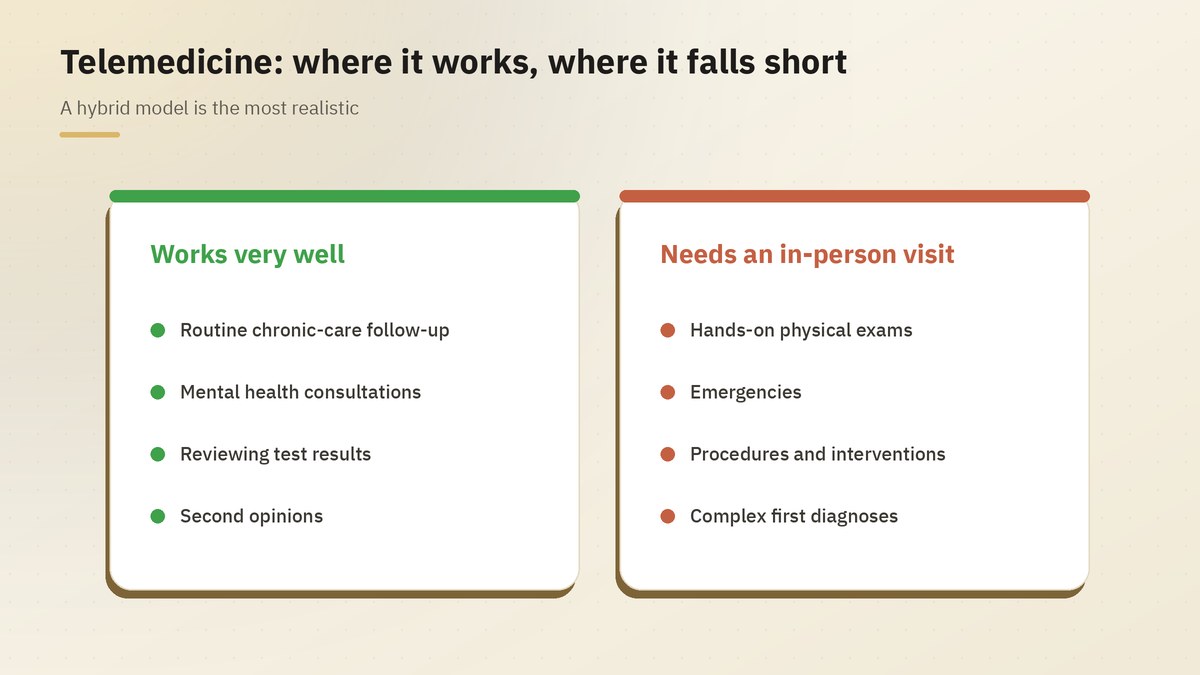
The most realistic model is hybrid: the screen for what suits it, the clinic for what needs it.
Cases it suits very well
- Chronic-disease follow-up: diabetes, blood pressure and others, where the doctor reviews readings and adjusts the plan without a visit every time.
- Mental health: where privacy and easy access lower the barriers to seeking help.
- Reviewing test and scan results and explaining them to the patient.
- Second opinions from a specialist who may not be available in the patient's city.
Cases that need an in-person visit
Hands-on physical examination, emergencies, medical procedures and many complex first diagnoses. Responsible remote care knows its limits and refers the patient to an in-person visit or emergency care without hesitation when needed.
Why the Arab world is a big opportunity
- High smartphone adoption and users already comfortable with digital services for payments, shopping and communication.
- Uneven distribution of specialists between major cities and elsewhere, which makes remote access genuinely valuable.
- Clear government direction towards digital health in several countries in the region.
- Crowded cities and busy schedules that make saving a trip to the clinic something patients appreciate.
The real challenges
Trust
Patients in the Arab world build a personal relationship with their doctor, and many still doubt the value of a consultation through a screen. Building trust starts with well-known, qualified doctors, a smooth experience and honesty about what can and cannot be done remotely.
Regulation and licensing
The rules for providing remote care differ between countries, and sometimes between authorities within the same country: who may provide the service, how prescriptions are issued and where data is stored. Any serious project must start by understanding these rules in every market it enters.
Payment and insurance
Insurance coverage for remote consultations is still uneven. Payment models must fit the habits of each market, from cards and digital wallets to monthly subscriptions and packages employers offer their staff.
Continuity
A one-off consultation with no record or follow-up has limited value. The real value appears when the remote consultation is connected to the patient's record, to the physical clinic and to a clear follow-up plan.
Telemedicine does not compete with the clinic; it extends it into the patient's home. The most successful models connect the two in a single journey.
Advice for providers and entrepreneurs
- Start with a specific specialty that clearly suits remote care, rather than a platform for everything.
- Keep the experience simple for older people and those less comfortable with technology: one link, no complicated apps.
- Build a clear referral protocol to in-person visits and emergencies.
- Protect the data according to each country's requirements, and make that part of your message to patients.
- Measure health outcomes, not just the number of consultations: did the patient's condition improve? Did they stick to follow-up?
Conclusion
Telemedicine in our region has moved beyond the experimental stage and has a big opportunity to grow. But success will not go to whoever launches an app fastest; it will go to those best able to build trust, respect the limits of remote medicine, and connect the screen with the clinic in one integrated care journey.